
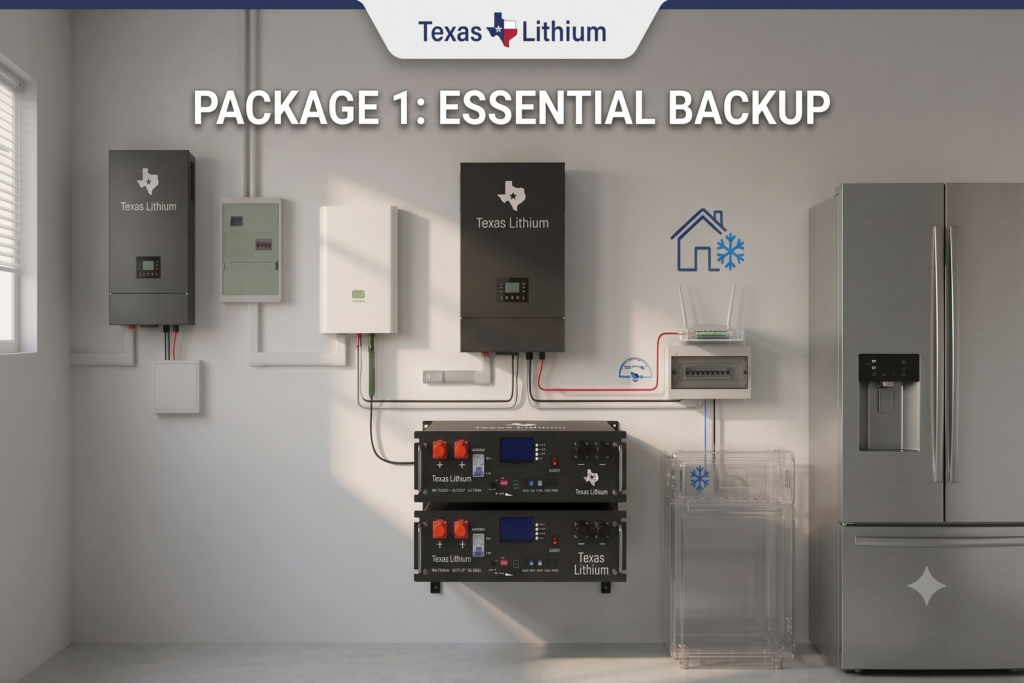
The sky turns charcoal over North Texas and the grid hums its final note before going silent. While your neighbors scramble for flashlights, your power stays on because you didn’t settle for “good enough” hardware. You understand that a reliable battery bank battery is the only thing standing between your family and total vulnerability during a storm or a long day on the water.
It’s frustrating to deal with heavy, short-lived lead-acid units that require constant maintenance. You want a system that works every time without you having to check water levels or worry about a sudden capacity drop. This guide stops the guessing game. We’ll show you how to choose, size, and configure the ultimate lithium setup to achieve total energy independence and peace of mind.
We’re cutting through the confusion of Ah versus kWh ratings to give you a clear path to a maintenance-free system that lasts over ten years. From powering critical home appliances with a 51V 320Ah unit to upgrading your golf cart with high-performance LiFePO4 cells, you’re about to learn how to build a power reserve that never flinches.
Key Takeaways
- Switch to LiFePO4 to gain 10x the cycle life of lead-acid while cutting system weight.
- Master the math behind Ah and kWh to accurately size your backup for critical emergency loads.
- Learn how to configure your battery bank battery in series or parallel to maximize voltage and capacity without compromising safety.
- Protect your investment by understanding the role of a Battery Management System (BMS) in preventing cell failure.
- Secure American-made reliability with high-capacity solutions like the 16.3kWh Home Energy unit for total independence.
Table of Contents
- Understanding the Battery Bank: The Heart of Energy Independence
- LiFePO4 vs. Lead-Acid: Choosing the Right Battery Chemistry
- Sizing Your Bank: Calculating Capacity for Real-World Use
- Configuration and Safety: Building a Fail-Safe System
- The Texas Lithium Advantage: Secure Your Power Independence
Understanding the Battery Bank: The Heart of Energy Independence
Power is no longer a guarantee. It is a resource you must secure yourself. A battery bank is a configuration of multiple batteries wired together to function as a single, high-capacity energy reservoir. This system is the core of any serious home backup, off-grid solar, or high-demand marine setup. Without a robust bank, your solar panels are decorative and your trolling motor is a paperweight. Reliability is the only metric that matters. When the grid fails or you are miles offshore, your system must perform. In 2026, choosing the right battery bank battery is the difference between a minor inconvenience and a total household shutdown.
For decades, lead-acid was the only option. That era is over. These legacy batteries are heavy, require constant maintenance, and die prematurely if you discharge them past 50%. Lithium Iron Phosphate (LiFePO4) has replaced them as the professional standard. It offers 10 times the cycle life and maintains consistent voltage until the moment it’s empty. You aren’t just buying power; you are buying a decade of certainty.
Stationary vs. Mobile Battery Banks
The hardware you choose depends on where it lives. Stationary home storage requires high-voltage systems, typically 48V or 51V, to handle whole-house loads. A unit like the Home Energy 51V 320Ah 16.3kWh LiFePO4 Battery provides the massive capacity needed to keep refrigerators, lights, and medical equipment running for days. These systems are built for endurance and scale. They sit at the center of your home’s energy security.
Mobile applications in RVs or boats prioritize weight and space. A 24V or 36V battery bank battery setup, such as the Texas Lithium 36V 100Ah Trolling Motor Battery, sheds hundreds of pounds compared to lead-acid equivalents. This weight reduction improves boat speed and fuel efficiency significantly. In both scenarios, an inverter acts as the essential bridge. It converts the stored DC energy into the AC power your appliances require to function.
Why Texas Homeowners Need Dedicated Storage
Grid instability is the new reality in Dallas, Houston, and San Antonio. Extreme weather events are no longer rare occurrences. They are annual threats to your safety. A dedicated battery bank provides a fail-safe against multi-day outages that leave thousands in the dark. You cannot rely on a fragile grid to protect your family.
Beyond emergency readiness, there is a clear financial advantage. Peak-shaving allows you to draw from your stored energy during high-demand hours when electricity rates spike. You stop being a victim of the grid and start controlling your own utility costs. Secure your independence now before the next storm hits.
LiFePO4 vs. Lead-Acid: Choosing the Right Battery Chemistry
Stop relying on technology from the 1800s. Lead-acid batteries are heavy, inefficient, and prone to sudden failure. They are a liability in a crisis. LiFePO4 (Lithium Iron Phosphate) is the only logical choice for a modern battery bank battery. It offers 10 times the cycle life of traditional batteries. While a lead-acid unit might survive 300 to 500 cycles, LiFePO4 delivers 3,000 to 5,000 cycles with ease. You aren’t just buying a battery. You are securing a decade of performance.
Usable energy is what matters. You can only discharge lead-acid to 50% before causing permanent damage. If you have a 100Ah lead-acid battery, you only have 50Ah of real power. Lithium allows for 100% Depth of Discharge (DoD) without compromising the cells. This means you get twice the energy from a battery that weighs half as much. It’s a set it and forget it solution. It frees you from the chore of checking water levels or cleaning terminal corrosion.
The Safety Advantage of Lithium Iron Phosphate
LiFePO4 is the safest lithium chemistry available. It possesses superior thermal and chemical stability. Unlike the lithium-ion batteries in cell phones, LiFePO4 will not catch fire or explode if punctured. It does not off-gas toxic fumes. This makes it safe for indoor installation in closets, basements, or garages. Every unit includes a built-in Battery Management System (BMS). This automated protector balances cells and prevents overcharging. It ensures your system remains fail-safe in any environment.
Long-Term ROI: Why Lithium Costs Less
Don’t let the upfront price deceive you. Lead-acid is a recurring expense. Over a 10-year span, you will likely replace a lead-acid battery bank battery three times to match the lifespan of a single LiFePO4 unit. When you factor in replacement costs, labor, and downtime, lithium is significantly cheaper per cycle. For boat and golf cart owners, the weight savings translate to less mechanical wear and better range. Investing in high-quality American-made lithium today prevents the financial drain of obsolete technology tomorrow. You save money by doing it right the first time.
Sizing Your Bank: Calculating Capacity for Real-World Use
Energy sizing isn’t a guessing game. It’s a calculation of survival. To build a reliable system, you must understand the difference between Amps, Amp-Hours (Ah), and Kilowatt-Hours (kWh). Amps measure the current flow. Ah measures capacity over time. kWh represents the total energy reservoir. A battery bank battery must be sized to handle your peak demand, not just your average use. If you undersize your system, you risk draining the cells too fast. This causes voltage sag and can trigger a system shutdown exactly when you need power most.
Start by identifying your critical load. This includes the absolute essentials: your refrigerator, well pump, medical devices, and basic lighting. Total the wattage of these items and multiply by the hours you need them to run. This number tells you the minimum capacity your bank requires. Don’t cut it close. Always build in a 20% safety margin to account for inverter efficiency losses and unexpected surges.
Home Backup Sizing Guide
Texas homeowners face unique challenges. In the Houston heat, keeping a small AC unit or a few fans running is a matter of safety. The Home Energy 51V 320Ah 16.3kWh LiFePO4 Battery is the gold standard for this application. It provides enough energy to keep a standard refrigerator and critical electronics running for over 24 hours. If you have high-demand medical equipment, this capacity offers the peace of mind that a smaller portable unit cannot match. These systems are also fully scalable. You can link multiple units to expand your battery bank battery as your energy needs grow, ensuring you never outgrow your investment.
Marine and Recreational Sizing
On the water, capacity equals time. If you’re tournament fishing in Port Isabel, you can’t afford a dead trolling motor by noon. A 36V system requires a dedicated 36V 100Ah or 105Ah setup to maintain peak thrust against heavy tides and wind. Switching to lithium allows you to maintain consistent power until the battery is nearly empty. Lead-acid batteries lose power as they drain, leaving you sluggish. Lithium also provides a massive weight advantage. Replacing three heavy lead-acid batteries with a single Texas Lithium 36V 105Ah Golf Cart LiFePO4 Battery can shed over 150 pounds. This improves your boat’s draft and top speed, letting you reach the best spots faster and stay there longer.
Configuration and Safety: Building a Fail-Safe System
A battery bank is only as strong as its weakest connection. If you wire your system poorly, you risk heat buildup, voltage drops, and premature cell failure. You must decide between series and parallel configurations based on your hardware requirements. Series connections increase voltage for high-power motors; parallel connections increase the total capacity of your battery bank battery setup. For most home backup scenarios, parallel wiring is the standard for maximizing runtime without increasing system voltage beyond your inverter’s capacity.
The Battery Management System (BMS) is the most critical safety component in your bank. It acts as the system’s brain, monitoring individual cell voltages and temperatures. If a cell drifts out of balance, the BMS corrects it. If it detects a short circuit or extreme temperature, it shuts the system down instantly. This automated protection is why lithium is safer for indoor use than legacy lead-acid batteries that can leak or off-gas.
Wiring Your Battery Bank
Connecting LiFePO4 units requires technical precision. Follow these steps to ensure a stable, high-performance system:
- Balance the charge: Charge every battery to 100% individually before linking them. This prevents massive current surges between batteries with different states of charge.
- Use busbars: Avoid stacking lugs on a single terminal. High-quality busbars ensure even current distribution across the entire bank.
- Size your cables: Invest in thick-gauge copper wiring to minimize resistance.
When you build a bank with the Texas Lithium 36V 105Ah Golf Cart LiFePO4 Battery, keeping your connections clean and tight is the only maintenance you’ll ever perform. Poorly sized cables create heat. Heat is the enemy of efficiency and longevity.
Monitoring and Maintenance
Modern lithium systems are largely autonomous, but you shouldn’t fly blind. Use smart monitors or Bluetooth-enabled BMS apps to track your bank’s state of charge in real-time. This data allows you to manage your energy loads proactively during a multi-day grid failure. You must install fused protection for every battery bank battery to prevent catastrophic failure in the event of an external wiring short.
Texas heat is a factor for any energy storage solution. While LiFePO4 has superior thermal stability, installing your bank in a ventilated, shaded area will help ensure it reaches its full 10-year lifespan. Don’t leave your power security to chance. Secure a professional-grade lithium system designed to handle the rigors of the Texas grid and the open water.
The Texas Lithium Advantage: Secure Your Power Independence
Don’t gamble with generic imports when your family’s safety is on the line. When the grid fails, your energy security depends entirely on the quality of your hardware. Texas Lithium provides American-made solutions designed specifically for mission-critical reliability. Every battery bank battery we build meets rigorous standards to ensure it performs in the harshest conditions. Our Home Energy 51V 320Ah 16.3kWh LiFePO4 Battery stands as the definitive choice for residential backup. It delivers massive capacity and industrial-grade durability. We offer high performance without the middleman markup found at big-box retailers.
We also provide specialized solutions for those who demand performance on the move. Our Texas Lithium 36V 105Ah Golf Cart LiFePO4 Battery and specialized trolling motor units are built to withstand the vibration and environmental stress of active use. You get the same premium lithium chemistry used in our home backup systems, optimized for your vehicle or boat. This is practical empowerment for people who value self-sufficiency and refuse to be sidelined by inferior equipment.
Built for Texas, By Texans
We understand the specific demands of the Lone Star State. From the extreme humidity of the Gulf Coast to the punishing dry heat of West Texas, our batteries are engineered to endure. We provide local support across Dallas, Austin, and San Antonio. This gives you peace of mind that help is nearby if you need technical guidance. You aren’t just buying a product; you are gaining a partner in preparedness. Our direct-to-consumer model ensures you receive professional-grade LiFePO4 technology at a better price. We cut out the corporate fluff and focus on pure power delivery.
Ready to Upgrade Your Power?
Vulnerability is a choice you no longer have to make. You can continue struggling with heavy, maintenance-heavy lead-acid units that fail when you need them most, or you can switch to a system that lasts over a decade. Assess your current state of readiness. If your existing setup cannot handle a multi-day outage or a full day of tournament fishing, it is time for an upgrade. The shift from grid-dependence to self-sufficiency starts with a single decision.
Take control of your energy future today. Stop guessing and start securing your power with a battery bank battery configuration that never flinches. Download our free preparedness guide to help you plan the ultimate system for your home, boat, or golf cart. Secure your independence with a high-capacity LiFePO4 upgrade built to last for the long haul.
Take Command of Your Energy Future
Don’t wait for the next grid failure to realize your power system is inadequate. You now have the definitive blueprint for a maintenance-free, 10-year energy solution. By shifting from outdated lead-acid units to high-performance LiFePO4, you eliminate vulnerability and gain total independence. Every decision you make about your battery bank battery configuration today determines your level of security during the next major storm or offshore excursion.
Reliability isn’t a luxury; it’s a necessity for those who value self-sufficiency. We provide American-made quality and massive 16.3kWh home units to ensure your household stays functional when others go dark. Our team delivers direct support across Texas to help you transition to a system that simply works. Stop settling for hardware that requires constant oversight and start trusting a setup built for the long haul.
Secure Your Power Today: Shop Texas-Made LiFePO4 Batteries
Your path to total energy independence is clear. Build your bank with confidence and stay ready for whatever the future holds.
Frequently Asked Questions
What is the difference between a battery and a battery bank?
A battery is a single energy storage unit, while a battery bank is a collection of multiple batteries wired together to act as one large reservoir. You build a battery bank battery setup to increase your total capacity (Ah) or system voltage (V) for high-demand applications. This configuration is essential for home backup or marine use where a single battery cannot provide the necessary runtime to survive a grid failure.
How long will a 16.3kWh battery bank run my house?
A 16.3kWh bank typically powers critical home loads for 24 to 48 hours depending on your specific consumption. This includes essentials like your refrigerator, well pump, and lighting. If you run high-draw appliances like central air conditioning, your runtime will drop significantly. Always calculate your “critical load” wattage to know exactly how much energy your household requires during an emergency.
Can I mix different battery brands in the same bank?
Never mix different battery brands, chemistries, or ages in the same bank. Doing so creates internal resistance imbalances that lead to cell damage or total system failure. For maximum reliability, every unit in your bank must be identical in capacity, voltage, and age. Stick to one manufacturer to ensure the internal Battery Management Systems (BMS) communicate and balance the cells correctly.
Is it better to connect batteries in series or parallel for a home bank?
Parallel connections are generally better for home banks because they increase your total capacity while keeping the voltage at a manageable 48V or 51V. Series connections increase voltage, which is necessary for specific motor requirements but adds complexity to residential inverters. Most modern backup systems are designed around high-capacity parallel configurations to maximize your total energy storage and simplify the wiring process.
How many years do LiFePO4 battery banks last compared to lead-acid?
LiFePO4 banks last 10 years or more, whereas lead-acid banks often fail within 2 to 3 years. Lithium Iron Phosphate supports 3,000 to 5,000 charge cycles at 100% depth of discharge without losing significant capacity. Lead-acid only survives 300 to 500 cycles and dies if you drain it past 50%. You are investing in a decade of certainty rather than a recurring and expensive replacement cycle.
What size battery bank do I need for a 36V trolling motor?
You need a 36V 100Ah or 105Ah lithium unit to power a 36V trolling motor for a full day of heavy use. A single Texas Lithium 36V 105Ah Golf Cart LiFePO4 Battery replaces three bulky lead-acid batteries, saving over 150 pounds of weight. This provides consistent thrust and maintains your top boat speed even as the charge level drops throughout a long day on the water.
Is a lithium battery bank safe to keep inside my garage in Texas heat?
Yes, LiFePO4 is safe for garage storage because it is thermally stable and does not release toxic gases. Unlike lead-acid, it won’t leak acid or corrode your garage floor in the Texas humidity. While these batteries handle heat well, keeping them in a shaded, ventilated area will help maximize their 10-year service life. Every unit includes a BMS to shut the system down if internal temperatures reach unsafe levels.
Do I need a special charger for a lithium battery bank?
You must use a charger with a dedicated LiFePO4 profile to protect your investment. Standard lead-acid chargers use different voltage stages that can damage lithium cells or fail to charge them to 100%. A proper lithium charger ensures the BMS can balance the cells correctly, which is vital for the long-term health of your battery bank battery. Don’t risk your system’s longevity with outdated charging hardware.